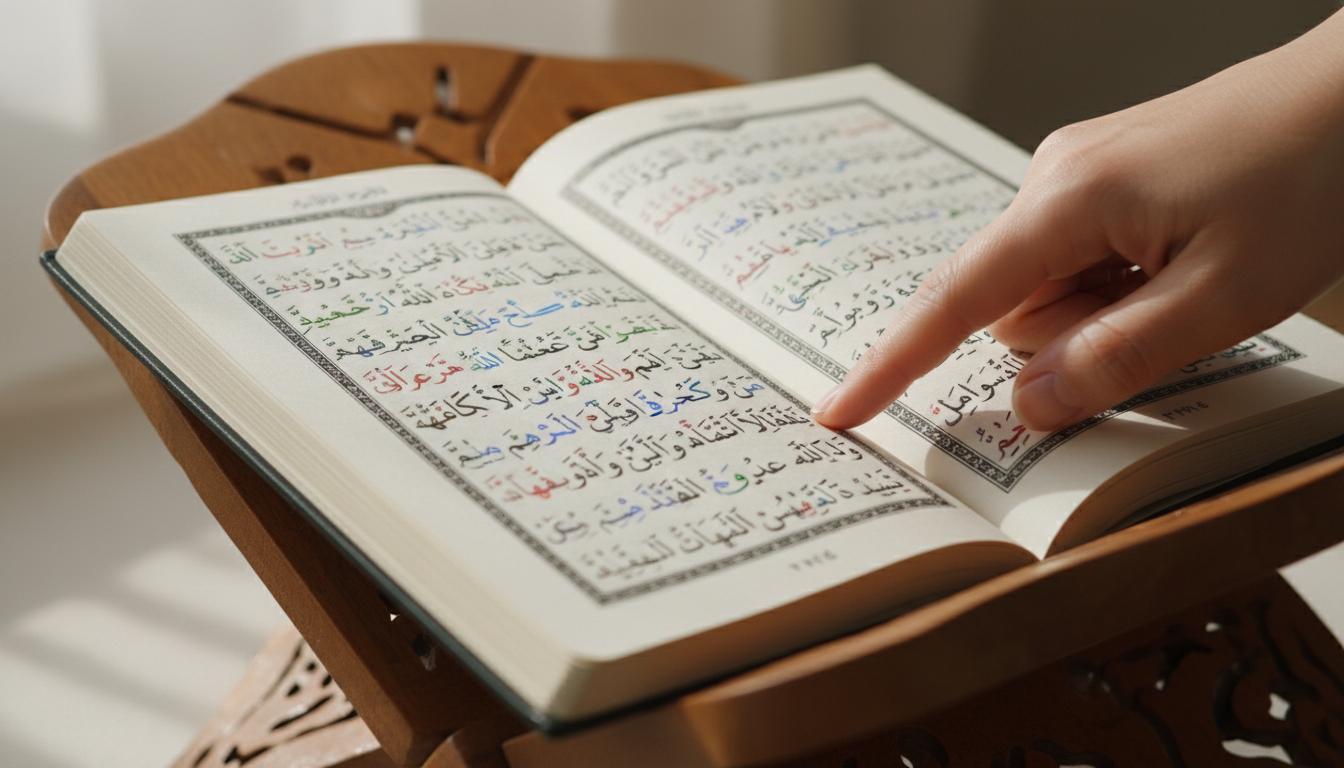
The word Tajweed literally means 'to make better' or 'to improve.' In the context of Quran recitation, it refers to the set of rules governing how each Arabic letter should be pronounced, articulated, and joined. But Tajweed is far more than an aesthetic pursuit—it is a protective barrier around the meaning of Allah's words.
Why Tajweed Matters
Arabic is a richly precise language. Changing a single letter or vowel can transform meaning entirely. Consider the difference between 'Qalb' (heart) and 'Kalb' (dog)—a subtle shift in the point of articulation that Tajweed prevents. Reciting without Tajweed risks unintentionally distorting divine speech, which is why the classical scholars made its study obligatory for anyone reciting the Quran aloud.
The Five Essentials Every Student Learns
- Makharij (Points of Articulation)
- Every Arabic letter emerges from a specific point in the mouth, throat, or lips. Our teachers use visual diagrams and physical demonstration to help students feel exactly where the tongue should touch.
- Sifaat (Letter Characteristics)
- Letters possess qualities like heaviness (tafkheem) and lightness (tarqeeq). The letter 'raa,' for example, changes its weight depending on surrounding vowels—a nuanced rule that transforms recitation from amateur to beautiful.
- Noon Saakin & Tanween Rules
- When a noon saakin or tanween meets certain letters, specific merging (Idghaam), conversion (Iqlaab), or hiding (Ikhfaa) rules apply. These are among the most frequently encountered rules in daily recitation.
- Meem Saakin Rules
- The rules for meem saakin are fewer but equally important, covering merging (Idghaam), clarity (Ithaar), and hiding (Ikhfaa).
- Madd (Elongation)
- Different types of Madd require stretching vowels for two, four, or six counts. Correct elongation gives recitation its flowing rhythm and prevents rushed, clipped reading.
The IQRA Teaching Method
We do not overwhelm beginners with every rule simultaneously. Our curriculum introduces Tajweed progressively: Qaida students learn basic makharij, beginner readers add noon saakin rules, and intermediate students tackle advanced Madd types. Each rule is practised across multiple verses until it becomes automatic.
Teachers hold Ijazah certificates in Tajweed, meaning their own recitation has been certified by a chain of authority stretching back to the Prophet (PBUH). This is not merely academic—it is a spiritual transmission.
Start Your Journey Whether you are a complete beginner or someone who has read Quran for years without formal Tajweed training, it is never too late to correct and beautify your recitation. Book a free trial and let us assess your current level with kindness and honesty.